
A Story That Demands to Be Told – But Stumbles in the Telling
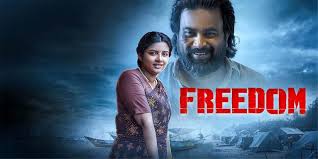
History’s darkest chapters often inspire cinema that feels essential, and Freedom is one such film. Set in the turbulent aftermath of Rajiv Gandhi’s assassination in 1991, it attempts to shine a spotlight on the plight of Sri Lankan Tamil refugees who arrived in India seeking shelter—but were instead treated with suspicion, cruelty, and silence.
Director Sathyasiva tackles this politically loaded and emotionally charged subject with a sense of duty. The result is a film that’s heavy with intent and righteous anger—but not always effective in execution.
Plot Summary
Freedom follows the story of Maaran (played by Sasikumar), who arrives in India with his pregnant wife Selvi (Lijomol Jose) and a forgotten pistol in his bag. That weapon is enough to raise suspicions, and the couple is quickly swept up by the authorities. Along with dozens of others, they are transported to the Vellore Fort, which becomes an unofficial prison, holding them for years without trial.
What follows is a grim tale of endless abuse—beatings, humiliation, mental breakdowns, and even suicides. The refugees are stripped of dignity and hope. Amidst this despair, a flicker of rebellion begins to grow. By 1995, forty-three prisoners decide they’ve had enough. In a daring climax, they tunnel, climb, and swim their way to freedom in a desperate mass escape attempt.
The Good: Emotional Weight and Strong Intent
There are moments in Freedom that genuinely land. The arrival scenes, showing refugees being rounded up and brutalized, are deeply moving. The suicide of a mute inmate—a symbol of voiceless suffering—hits hard. The separation of families, the unrelenting isolation, and the bureaucracy’s cold indifference create a painful emotional landscape that’s impossible to ignore.
Sathyasiva’s research into the real-life 1995 escape is evident. He gives a face to history’s forgotten victims, bringing their stories to the forefront. For viewers unfamiliar with this disturbing chapter, Freedom serves as a sobering introduction.
Sasikumar, in a role similar to his recent work in Tourist Family, lends quiet strength to Maaran. His portrayal is grounded, even when the script occasionally leans toward melodrama. Lijomol Jose, though underused, brings depth to the role of a grieving mother and resilient wife. Ghibran’s score enhances key emotional beats, shifting between mournful restraint and urgent tension. Uthayakumar’s cinematography captures the grim, claustrophobic atmosphere of the fort convincingly.
The Weakness: Heavy-Handed and One-Dimensional
The biggest issue with Freedom lies in its execution. The story is important, but the film struggles to strike a balance between emotional engagement and narrative depth. Nearly every scene arrives with a clear directive: now feel sad, now feel angry. This removes room for subtlety or audience reflection.
The villains, particularly the prison officer (Sudev Nair), are written like caricatures—brutal for the sake of being brutal, lacking complexity. The refugees, in contrast, are portrayed almost entirely as suffering victims, with little nuance or individuality beyond their pain.
Maaran’s action-hero moments, including surviving assassination attempts or overpowering inmates, feel out of place in an otherwise grounded story. The lawyer’s character (Malavika) is barely developed, and the final escape sequence, while thrilling, is filled with improbabilities and plot holes that undercut its emotional payoff.
Final Verdict
Freedom is a film with its heart in the right place. It takes a real, buried piece of history and brings it to the screen with sincerity and urgency. However, its storytelling lacks the subtlety, complexity, and polish needed to make it truly powerful cinema.
Instead of letting the story speak for itself, it often pushes the audience too hard, reducing its characters to symbols rather than people. That said, the film does enough to encourage viewers to look up the true events, which may well be its greatest achievement.