
From the moment the film begins, Kantara: Chapter 1 exudes scale and ambition. Director-actor Rishab Shetty manages to deepen and expand the mythic world introduced in Kantara (2022), and he does so with conviction. If you want to be transported — into folklore, ancient landscapes, supernatural beliefs, human conflict — this film succeeds more often than not.
Here are the things I really loved:
What Makes It Great
- Spectacular Visuals & Technical Mastery
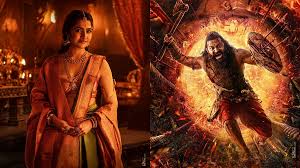
The film is a visual feast. The cinematography captures forests, rituals, chariot scenes, landscapes with such richness and texture that you truly feel part of that world. The use of lighting, color grading, and meticulous production design bring authenticity and a certain majesty to even static moments. The VFX & CGI (especially in the climax / Daiva manifestations) are strong, giving a visceral, immersive impact. - Powerful Performances
Rishab Shetty carries this film — his presence, especially in the intense, spiritual, and ritualistic moments, gives the film weight. Rukmini Vasanth is also excellent, delivering a performance that holds its own against the larger-than-life backdrop. The antagonists and supporting cast (like Jayaram and Gulshan Devaiah) contribute well; they aren’t mere caricatures, but people with motivations, doubts, and fear. - Folklore & Cultural Depth
One of the strongest elements is how the story weaves in myth, ritual, tribal beliefs, and the spiritual ideas around nature and the divine. It doesn’t feel like an afterthought or decoration — the folklore is integral to the plot and thematic arcs. The film asks questions about faith, community, identity, and the relationship between humankind and nature, which gives it layers beyond “just action + spectacle.” - Crescendo & Climax That Hits Hard
Even if parts of the movie take time to build — and yes, the pace is gentler in the early half — once the film shifts into its second half, the tension rises sharply. The climax, in particular, is emotionally and visually rousing. Many audience reactions mention being left with goosebumps, especially in the final ten minutes. - Grand Ambition & Big-Screen Worthy
The film takes advantage of its scale — not just budget, but storytelling scale: the canvas is wide, the stakes are old and existential (land, faith, rituals, power). It feels designed for a theatrical experience — loud, large, immersive. If you have access to a good screen (with good sound, dark room), it rewards you.
Why It’s a Must-Watch
For people who love mythology / folklore cinema and stories rooted in culture, Kantara: Chapter 1 gives plenty to chew on.
If you enjoy visuals and soundscapes that work as strongly as — or nearly as strongly as — the story itself, this film delivers.
It’s also satisfying for fans of the original Kantara, because it extends the lore, gives context, and raises the bar in production.